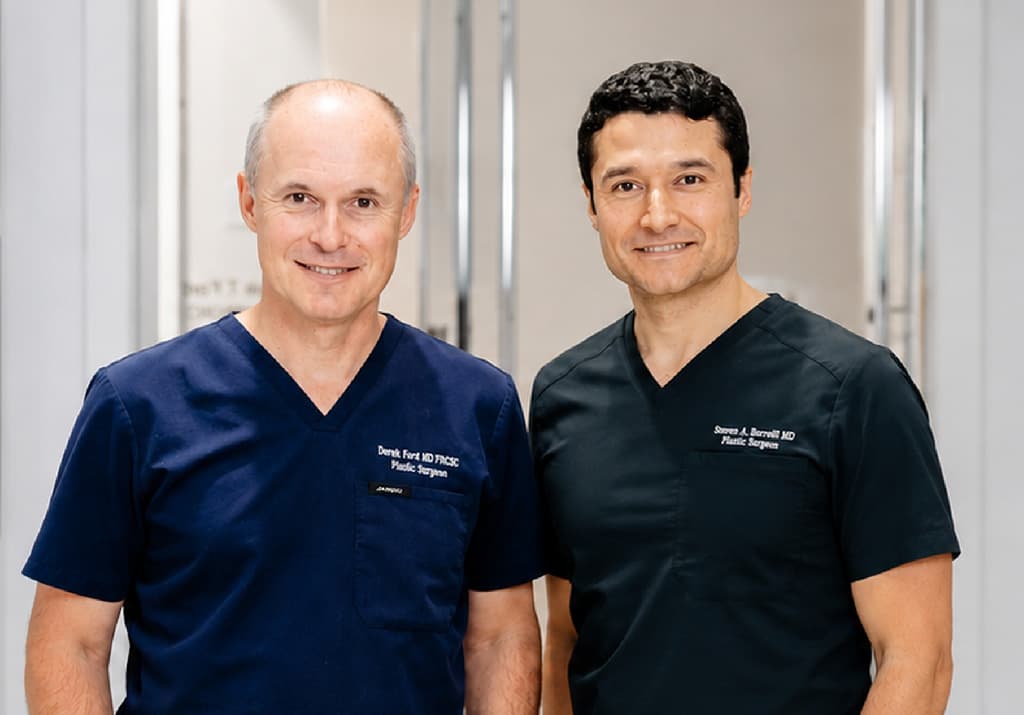
Toronto plastic surgeons Dr. Derek Ford and Dr. Steven Hanna perform fat grafting, or fat transfer, to soften creases and replace lost volume for a natural-looking facial restoration. Often performed in combination with face and neck procedures, fat grafting is an innovative way to add soft, youthful contours to your face with very little risk of an adverse reaction. Both Dr. Ford and Dr. Hanna have specialized training in this multi-faceted procedure. Dr. Ford trained with plastic surgeons Dr. Sydney Coleman and Dr. Roger Khouri — both pioneers in fat grafting techniques.
Fat grafting is a procedure that involves harvesting fat from a donor site on your body (typically the abdomen or thighs), purifying it through a special process, and using it to augment areas of your face such as the cheeks and hollows beneath the eyes. Because the procedure uses the patient’s own fat instead of a synthetic filler, results are typically very long-lasting. Fat grafting can also be used to enhance the volume of other areas of the body, including the breasts, hips, or buttocks.
Patient Results
See the possibilities of our surgeons' work for yourself when you visit our gallery of real patient before-and-after photos.
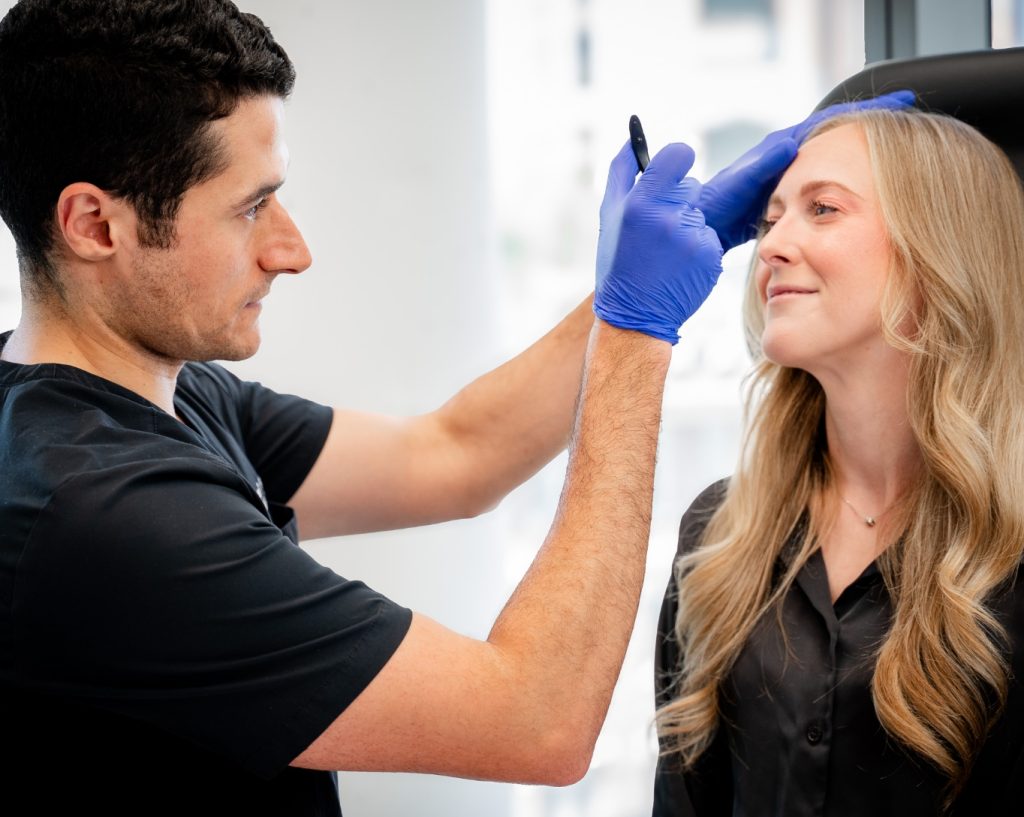
During your initial consultation, your surgeon examines your entire face to determine where you may benefit from fat grafting. Through a brief physical examination of your legs or abdomen, he also determines whether you have enough donor fat to use for the procedure. Fat grafting is not an effective solution for lips. If you wish to enhance the size or shape of your lips, our surgeons often recommend an injectable filler for the best results.
If you and your surgeon determine that you are a candidate, you discuss the surgical process and your projected recuperation to ensure the surgery is a good fit for your lifestyle.
Envision Your New Look
Our practice offers Crisalix, a way for patients to preview their results in 3D. This adds a tangible, visual element to your planning process, giving you and your plastic surgeon a common, beautiful goal.
In some cases, fat grafting can be performed using a combination of local anesthesia with intravenous sedation. Your surgeon begins by performing a gentle form of liposuction on your predetermined donor site. While you are still anesthetized, he purifies the donor fat using a special process. He then adds the fat to your face, carefully sculpting it to give you the contours and definition you desire.
If you undergo fat grafting as an accompaniment to facelift, you will likely need general anesthesia to ensure your complete comfort during and after surgery. Your surgeon reviews the specifics of your procedure well before the surgery date.
Our Facial Aesthetic Specialists
For the most natural-looking facial plastic surgery results, it's important to choose your plastic surgeon in Toronto carefully. Dr. Derek Ford was the first surgeon in Canada to offer the endoscopic mid facelift. He and Dr. Steven Hanna have notable credentials, including:
Royal College certification in plastic surgery
Training with several of the world's most renowned pioneers in facial surgery
Expertise in endoscopic techniques
Extensive experience in facial surgery and aesthetic balance
A reputation for natural-looking results that do not look overdone
Customized surgical plans (no “one-size-fits-all” procedures)
The details of your recuperation depend largely on the scope of your surgery. If you underwent facelift surgery in addition to fat grafting, you will likely require up to 2 weeks off from work and other social activities. It’s also important to keep the donor site supported, since temporary swelling is a common effect of liposuction. You may need to wear a special compression garment to reduce swelling. Your surgeon gives you a more specific timeline of your projected recuperation during your consultation and subsequent pre-op appointments.
Fat Grafting Considerations
No surgery is completely free of risk, but fat grafting is widely regarded as safe thanks to its use of the patient’s own fat. Your individual risks may vary, and your surgeon carefully considers your personal health history before proceeding with surgery.
While patient experiences vary, you can expect the soft, contoured results of your fat grafting treatment to be long-lasting.
The ideal fat-grafting candidates have areas of hollowing that would benefit from augmentation, some excess fat to use for grafting, and long-term goals.
What does recovery from micro fat grafting look like?
Recovery from micro fat grafting usually involves minimal downtime, with possible swelling and bruising that typically subsides within a week or two.
How long does micro fat grafting last?
The volume changes from micro fat grafting are permanent. Some of the transferred fat does not survive, but the fat that remains becomes a lasting part of the treated area.
What areas of the face can benefit from facial fat grafting?
Facial fat grafting is often used to restore volume lost with aging. Commonly treated areas include the temples, pre-jowl area, upper cheeks, and creases around the mouth.
How does facial fat grafting work?
Fat is typically harvested from the lower abdomen, inner thighs, or waist using liposuction. It is purified, placed into 1cc syringes, and injected as small droplets into the deep tissues of the face through a tiny puncture, which heals on its own without needing a suture.
How much fat is harvested for micro fat grafting?
When treating the full face, typically 10–50 cc of fat is prepared for grafting.
What are the risks of facial fat grafting?
Risks include under-correction of volume, infection at the injection site, and the formation of oil cysts that may need rupture in a clinical setting. In very rare cases, a vascular embolism may occur
Take The Next Step
To learn more about facial rejuvenation options, request a consultation online with Dr. Ford or Dr. Hanna, or call our Toronto office at
(416) 925-7337 to schedule your appointment.